






This year Bradford School of Management became the first business school in the world to launch an MBA focused on the model of a circular economy. Partnered with the Ellen MacArthur Foundation, an organization set up to increase the knowledge of the circular economy as a sustainable business method and ideology, Bradford’s new distance learning MBA establishes itself jointly on the reputation of the charity and the school (founded by long-distance sailor Ellen MacArthur, former holder of the record for fastest solo circumnavigation of the globe).
The Innovation, Enterprise and Circular Economy MBA, to give it its full name, is a traditional MBA program in all but its emphasis on the circular economy. The aim of the program is to create MBAs with all the knowledge of the model along with the motivation to use their MBA as a platform to further the scope of the model in business and society. Professor Peter Hopkinson is director of the course and believes that the program will inspire his students to strive towards a sustainable business future in their business careers.
Circular economy vs. the current linear economy
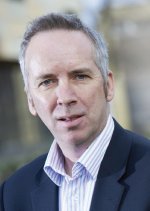
The current economy can be described as a linear economy, “a ‘take, make, dump economy’” says Prof. Hopkinson. “You take stuff out of the ground, you harvest it, you make something, you use it once and then you throw it away. It’s been successful for many decades in certain parts of the world, predicated on the idea of cheap and easy access to resources, materials and energy. It will continue to operate but there is lots and lots of evidence and many signals to suggest that this cannot continue and that what we’re entering is an era of ever increasing resource commodity and energy prices.”
The CE model then, is an attempt to delinearize the current economic system and is a concept that businesses are becoming more attuned to as they realize that the current model is under strain. “They’re seeing what’s happening in terms of resource price increases, resource price volatility and the increasingly difficult issues around access to resources, materials and energy,” says Prof. Hopkinson. Because of this, many companies are beginning to see that there are alternative ways of doing business which would allow them to recover some of this lost value.
Sustainable business practices
Resource value is a big deal for businesses these days and in order to create sustainable business practices, companies must start to look at their current processes and ask how it would be possible to get back their used resources. Instead of selling outright to the consumer, the business may look into hiring the product out in order to retrieve the value of the parts at the end of its shelf-life.
Many companies are already changing their goals to reflect circular values. Rolls-Royce has transitioned to the concept of selling air miles by loaning out its engines, B&Q has begun renting out its electric drills and upping the quality for a longer-life product, and Renault, instead of selling cars, sells mobility by leasing the battery of its electric vehicles. Prof. Hopkinson iterates that these companies, “want to hang on to those raw materials so that their business models can be sustained into the future.” This idea also puts more emphasis on a loyal consumer-company relationship which, if managed successfully, could last a lifetime.




Get closer to your dream programme
Your consent preferences have been set.
Time to start exploring.
Your account has been removed.
You can still browse the site or sign up again once you have parental consent.
Get closer to your dream programme