







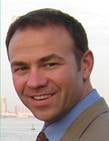
 Gino Marchetti is a Strategic Accounts Manager and Partner at Orion International, the nation’s largest military recruiting firm. He has a BS in Economics from the U.S. Naval Academy and an MBA in Finance from USC Marshall School of Business. Prior to joining Orion, he spent five years serving in the U.S. Navy as a Surface Warfare Officer. In this interview, he offers advice for veterans who are considering getting an MBA and explains why more companies are looking to hire military MBAs.
What is your background? What made you decide to get your MBA?
I was an undergrad at the Naval Academy. After finishing up school there in 2000, I was in the Navy for five years as a surface warfare officer, or ship driver in layman’s terms. When I got out of the military I was job searching just like most veterans, and came across Orion through a college buddy -- someone I had gone to the Naval Academy with and was in the same company with. He was working in Orion at the time, and he introduced me to Orion and I’ve been here for the past seven years or ever since leaving the military in 2005.
As far as getting my MBA, when Obama had come out with additional guidelines for GI Bill monies or reallocation of funds towards GI Bill late ’09 and beginning of 2010, I didn’t know if I was eligible, so I filled out my paperwork to the VA and said "I think I’m not eligible per my understanding of the guidelines." But I said "Hey, I'll fill it out anyway and let them say 'no' if I'm not eligible". And actually it came back and, I was fully eligible.
So I said “Wow! Well, okay.” I’d always thought about getting an MBA. My old man was a class of ’70 grad from the academy. He got his MBA from UVA and I got to see where he’s at in his professional world and kind of what opportunities have been afforded to him and our family. I always knew I wanted to go and learn more about companies. In recruiting you learn a lot about companies, and how they hire and things like that. Of course, you understand a little bit about what affects their industries, but you don’t necessarily know how a company is formed, how does the day-to-day financials work, what is the DNA and lifeblood of a company and how does it make its decisions with kind of assets, liabilities, and that whole equation.
That was really the curiosity. I’d worked with lots of companies in all kinds of industries and placed military candidates into them, but I still didn’t know how those companies worked – what was behind the curtain, so to speak. So that really was my desire to get an MBA to learn more. Once I found out I had some GI Bill money available to me, I said “Wow! That’s kind of use it or lose it type of thing.” The economy was going through a bit of a recession at that time. I could kill two birds with one stone and be working towards an MBA while working full-time. That was really my motivation.
Once I had applied to a couple of places, I realized that USC had an Executive MBA program with a satellite campus down here in San Diego. So, my goal was to go to a Top 20 school. And with USC offering a satellite and not having to drive to downtown LA to go to school, I jumped at that opportunity seeing that was the best format for me in working full time and still living in San Diego.
How did your military background help you as you went through your MBA program?
My military background probably helped me the most with managing time and being able to work with lots of different types of people, different ethnicities, different types of learning styles, different types of communication styles, and really at the end of it, the different types of leadership styles. Everybody in an MBA program is upper tier, if you will, just due to the screening process -- they’ve already gone through and gotten their degrees. Now that they’re applying again, they have to pass a certain screening criteria to be part of an MBA.
So you’re part of an upper group of people who want to improve themselves, and you want to be able to engage with them and work with them on projects and just studying and things like that. So having that experience in the military of dealing with lots of different types of people and having changed jobs so many times in the military, seeing both good and bad leadership styles, you learn how to work with lots of different types of people from the military and that’s what really helped me out with the MBA as far as from a military background perspective.
How has your MBA helped you in your current position?
It’s helped me in becoming more understanding into what my clients face within their industries. Additionally, I know a little bit more about why decisions are made when you hear some news within a certain industry, why companies decide to go a certain direction, and how budgeting works, and how a company has an operating budget and then spends their money on a fiscal year. So really, again, the finance, the fiscal, I have a better understanding as well as a lot of the common buzzwords. I probably would not have discovered a lot of the terminology had I not gone through an MBA program; so, the lingo that you use at the highest levels.



Get closer to your dream programme
Your consent preferences have been set.
Time to start exploring.
Your account has been removed.
You can still browse the site or sign up again once you have parental consent.
Get closer to your dream programme