


Your input will help us improve your experience.
Your input will help us improve your experience.You can close this popup to continue using the website or choose an option below to register in or log in.
Already have an account? Sign in
Sign up free to keep exploring.
We use Necessary cookies to make our website work. We’d also like to set optional Functional cookies to gather anonymous site visitation data and Advertising cookies to help us understand which content our visitors value the most. By enabling these cookies, you can help us provide a better website for you. These will be set only if you accept.More information about the cookies we use can be found here Cookies Policy
Thanks for visiting TopUniversities.com today! So that we can show you the most relevant information, please select the option that most closely relates to you.
Views
Pushing the Boundaries of Industry Networking for MBA Students
Save
Share
Share via
Share this Page12
Table of contents
Table of contents
This article is sponsored by EU Business School - learn more about its MBA programs
Business schools are becoming increasingly globalized, extending their reach beyond national borders, and their foothold across continents. Having campuses in various international locations provides an array of strategic and economic advantages for a business school, its faculty, and its students. For an MBA candidate whose prime motivation is to progress their career in business, having the ability to study across campuses and countries offers significant opportunities and industry exposure.
Building successful corporate partnerships is at the heart of what every reputable business school does, and if a school has strategic reach, so too has the student. Here is an insight into EU Business School (EU), and the extensive industry networking and career opportunities offered across its four campuses in Spain, Switzerland and Germany.
Three terms and two country choices: Advantages of cross-boundary MBA industry networking
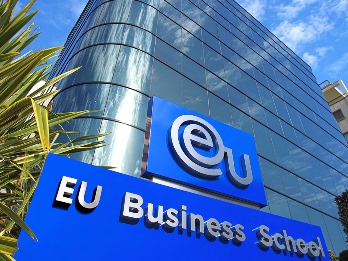
If peer-to-peer and industry networking is a primary objective, multi-campus business schools are well placed to offer prospective MBA students a very tangible advantage. EU Business School students, for example, have the option to choose between four cities for their MBA: Barcelona in Spain, Montreux and Geneva in Switzerland, and Munich in Germany.
The school’s MBA program is split across three separate 10-week terms, one of which can be spent at a different campus. Each campus has its own very specific geographical, cultural and economic attributes. Whether it’s the financial hub of Geneva that ultimately attracts the wannabe banker, Munich's high tech industry that draws the IT aficionado or Barcelona’s buzzing startup community that appeals to the budding entrepreneur - the point is that EU’s MBA students don't just have access to one city.
Transnational corporate partnerships yield greater opportunities for industry visits
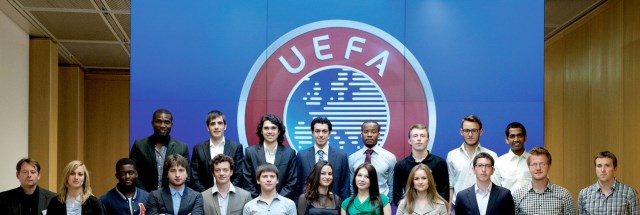
EU Business School has built up a healthy repertoire of longstanding relationships with organizations and corporations spread across the three countries in which it operates. Company visits and industry networking opportunities are part and parcel of the MBA curriculum at EU, and big names such as BMW, Garmin, UEFA, and even the UN, open their doors to students each term.
This organized inside view of large company operations, alongside contact with c-suite leaders and influential public servants is priceless for those keen to ask questions and unravel the mechanics of successful business and leadership. Not only are hands shaken within company walls, large and small - students at EU Business School also attend industry networking events as well. Baselworld is one such event and one in which students can mingle with those at the helm of renowned companies in the watch and jewelry industry, such as Omega, Hublot and Tissot.
EU is also partnered with the Geneva Chamber of Commerce, Industry and Services (CCIG) which represents around 2,000 Geneva-based companies and organizations. Corporate partnerships with the Montreux Jazz Festival, TEDx and Toastmasters International can also be added to this list. It’s clear, then, that a busy industry networking schedule is open to MBA students of the school should they decide to embrace the array of opportunities that are provided through conferences, seminars and events.
Industry speakers for MBA students to write home about
EU Business School also brings in leading industry practitioners as guest speakers on its programs. Guest speaker sessions are a regular occurrence at EU, and MBA students will have the chance to meet and learn from representatives attached to big-name companies, such as Nike and Bloomberg. Students recently sat with Peter Brabeck-Letmathe, former chairman and CEO of Nestlé, to hear his thoughts on nutrition and the innovation and impact of the food industry. Susy Bobenrieth, former vice president of HR Latin America at Nike, and Ferran Juncar, global sponsoring director at Dorna Sport (the commercial rights holder for the motorcycling sport of MotoGP) are other influential figures that have attended EU's speaker series this year.
Multinational careers offices and entrepreneurship initiatives
MBA students and alumni usually choose to attend business school for one of two reasons - to be their own boss, or to fast-track their career in business. EU Business School’s extensive corporate partnerships open doors to many industries – partnerships which work to the benefit of the 'career advancer'. Careers offices in each of the school’s four campuses are also there to guide and encourage, providing candidates with the right contacts to reach out to and, ultimately, helping them to ace the interview and launch their dream career.
For prospective entrepreneurs, there's an MBA major in entrepreneurship on offer. EU has also devised numerous entrepreneurship initiatives and competitions. As a school that tries to readdress the gender balance in MBA education, they have additionally introduced the Virtual Entrepreneurship Program, in association with the Professional Women’s Network (PWN) with the aim of encouraging more women to run their own enterprises.
This article is sponsored by EU Business School
A content writer with a background in higher education, Karen holds an MA in modern languages from the University of St Andrews. Her interests include languages and literature, current affairs and film.
Recommended Articles Last year
MBA After BA: Should I Do an…
MBA programmes accept an array of undergraduate students. Read our QS guide on how to pursue an MBA with a non-business graduate degree.
Measure your MBA ROI
Business school is expensive, there’s no two ways about it. A simply MBA ROI calculation, however, will show you that it’s worth it…
MBA accreditation: everythin…
When looking for the right MBA programme, accreditation is an important consideration. It allows students to understand the way their qualification will be seen by employers and how it can be compared to other highly-regarded programmes.