






“Responsible leadership is something we put a strong emphasis on at ESMT,” reflects Stephanie Kluth, head of admissions at the European School of Management and Technology. It is for this reason that ESMT chose to become part of the Kofi Annan Business Schools Foundation, along with four other business schools around Europe.
The aim of the organization is to encourage applicants from developing countries (those listed as LDCs or LLDCs by the UN, or Palestine) to apply to the participating schools by offering MBA scholarships. The total value of the Kofi Annan Fellowship offered by ESMT is €58,000 – around US$78,750 – which covers tuition, accommodation and other associated program costs. Up to three are on offer annually. The successful applicants can then return to their home countries and use put what they’ve learned into practice.
“One of the biggest desires of ESMT’s founding dean Wulff Plinke is to get more people from developing countries to learn about responsible leadership, so they can contribute. He stepped down as dean in 2011, and spends a good deal of time now trying to recruit these students, and raising funds for scholarships with the help of corporate partners and the friends of ESMT.”
As well as the fellows themselves, and the economies to which they will return, the rest of the class benefits from the presence of these MBA scholarship winners. “They bring a different perspective. Though they tend to come from similar professional backgrounds, they have lived and worked in a very different environment, in which different factors will impact the way business is done. This shakes up the perceptions of students from a European or North American background.”
Accordingly, the selection process for the MBA scholarship also looks for a two way fit. “What we’re really looking for is why they want to do an MBA; if we can contribute to their career plans, and at the same time, if they can contribute to the class. The MBA should be enriching for the person and the person should be enriching for ESMT,” explains Kluth.
Applicants to the scholarship must show a willingness to make a positive impact in their home countries post graduation – though Kluth adds that they may build some experience in Europe first.
While working in the development or non-profit sector might well be a boon, she adds, it is not necessarily the main criterion – indeed, this is very rare in applicants, though with the network steadily growing, it may be more the case in the future.
“We would like to develop ESMT’s network in developing countries. We want the fellows to assist each other, and help develop an entrepreneurial spirit in their home countries,” Kluth concludes. “Hopefully this will lead to an increase of students from these regions who attend business school, who can then also take back the merits you get from an MBA, returning with business skills as well as a sense of responsible leadership.”
 Ernest Gyimah
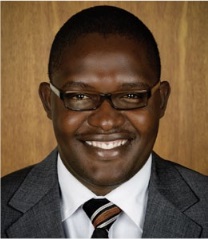 Bevin Ngara








Get closer to your dream programme
Your consent preferences have been set.
Time to start exploring.
Your account has been removed.
You can still browse the site or sign up again once you have parental consent.
Get closer to your dream programme